
Plenary Speakers:
Jannie S.J. van Deventer
Zeobond Pty Ltd., Brighton, Australia & Honorary Professioral Fellow, The University of Melbourne, Australia

Title: Low- CO2 concrete in Australia - Three decades of technical development and commercial progress
Abstract: This review of technical and commercial development of activated concrete with ultra-low CO2 emissions in Australia provides valuable lessons. The driver for adoption in Australia continues to be (a) CO2 reduction, and (b) utilisation of recycled materials. Cost reduction has not been a driver, although the market will pay only marginally more for CO2 reduction. Today, the benchmark is a 30% substitution of Portland Cement (PC) by supplementary cementitious materials (SCM). In addition to the use of ground granulated blast furnace slag (GBFS) and coal fly ash (FA), a recently developed standard also specifies manufactured pozzolans. Despite decades of technical progress and demonstration projects, there remain regulatory obstacles to the adoption of concrete with a high SCM content, hence a reduction of 80% CO2 based on the binder. Although the standards framework supports such concrete, the state-based road authorities approve concrete only upon disclosure of the mix design. This mindset reflects naivety regarding protection of intellectual property (IP). Most private and government asset owners and contractors will only adopt a concrete that has been approved by the road authority. This obstacle will be solved only through the adoption of true performance-based codes instead of the current pseudo-prescriptive codes.To this aim, a revised conceptual framework for predicting concrete durability is required, negating durability models based on simplistic carbonation and chloride migration tests.
The talk proposes and discuss the development of a new class of synthesised low-CO2 binder that does not require GBFS or FA, the supply of which is dwindling. There is much opportunity for entrepreneurs in the development of novel cements.
Wouter De Corte
Department of Structural Engineering and Building Materials, Faculty of Engineering and Architecture, Gent University, Belgium

Title: Infill patterns generated by selective paste intrusion particle‑bed printing: an analysis
Abstract: Topological optimization of a concrete member may lead to a geometry where certain zones need to be neither solid nor empty. This can be achieved using infill patterns, which provide intermediate strength and stiffness with reduced material consumption. However, when the objective is to retain mechanical properties fairly equally in all directions, traditional two‑dimensional patterns such as honeycombs do not suffice, and one must rely on three‑dimensional patterns such as gyroids. However, such 3D patterns are very difficult to achieve by extrusion‑based concrete printing due to the large overhangs and frequent start‑stop operations. Selective Paste Intrusion (SPI) is emerging as a powerful route for producing complex, high‑performance components with tailored internal architecture. Understanding how infill patterns influence mechanical behavior is essential for advancing the technique from experimental setups to robust industrial applications. Based on various tests, relationships between infill type, density, printing direction, and mechanical properties are discussed, as well as their relation to topological optimization.
Petr Hájek
Department of Architectural Engineering, Faculty of Civil Engineering, Czech Technical University in Prague, Czech Republic
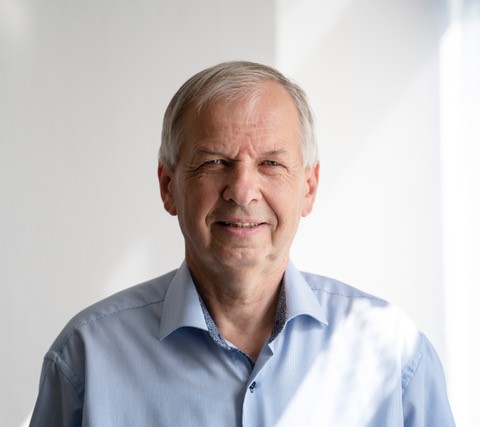
Title: Sustainable and Resilient Built Environment in a Changing World - Challenge for Concrete Structures
Abstract: Recent developments and changes in the natural and socio-economic environment require new technical solutions for the construction of new buildings and the modernisation of existing ones. Buildings, infrastructure and the entire built environment should be better prepared for new conditions – they should be sustainable, resilient and adaptable to new situations. Concrete is the second most widely used material in the world after water. This raises the need to save resources for new concrete and to recycle old concrete structures within the framework of circular principles. Concrete and new advanced types of silicate composites, including the use of recycled components, are gradually becoming building materials with a high potential for new technical solutions that lead to the necessary reduction of environmental impact and subsequent social and economic improvement. The lecture will present the implementation of the sustainability and resilience approach to the development and design of concrete structures using the principles specified in the new fib ModelCode 2020 (MC2020). This new ModelCode not only addresses traditional requirements for safety and serviceability, but embraces sustainability, which is becoming a paramount core requirement responding to broader issues such as social responsibility, environmental quality and economic efficiency. Some examples of research results and examples of specific structures contributing to a sustainable and resilient environment will also be presented.
Keynote Speakers:
Isabella Lancellotti
Department Engineering "Enzo Ferrari", University of Modena and Reggio Emilia, Modena, Italy
Title: Alkali Activation for Sustainable Development: Optimizing Activating Solution Chemistry for Non Traditional Precursors
Pavlo Kryvenko
Scientific Research Institute for Binders and Materials, Kyiv National University of Construction and Architecture, Kyiv, Ukraine
Title: Understanding approach to increase temperature resistance blended Portland cement: to impact of alkaline additives
Angel Palomo
Eduardo Torroja Institute for Construction Sciences, The Spanish National Research Council, Madrid, Spain
Title: Coal gangue: An abudant waste to produce cementitious materials.
Hector Cifuentes
Escuela Técnica Superior de Ingeniería, Universidad de Sevilla, Sevilla, Spain
Title: Hybrid Steel–Basalt Fibre Reinforcement in Ultra-HighStrength Concrete: Influence on Flexural Tensile Behaviour
Jacek Katzer
Department of Building Engineering, Institute of Geodesy and Civil Engineering, Faculty of Geoengineering, University of Warmia and Mazury in Olsztyn, Olsztyn, Poland
Title: The Moon – Our Next Building Site
Hossein Naghizadeh
Department of Engineering Sciences, University of the Free State, Bloemfontein, South Africa
Title: Recyclability of Fly Ash Geopolymer Binder: Toward Circular Construction
Hakim S. Abdelgader
Department of Civil Engineering, Faculty of Engineering, University of Tripoli, Tripoli, Libya
Title: Self- compacting grout and concrete: Manufacturing Processes and Engineering Benefits